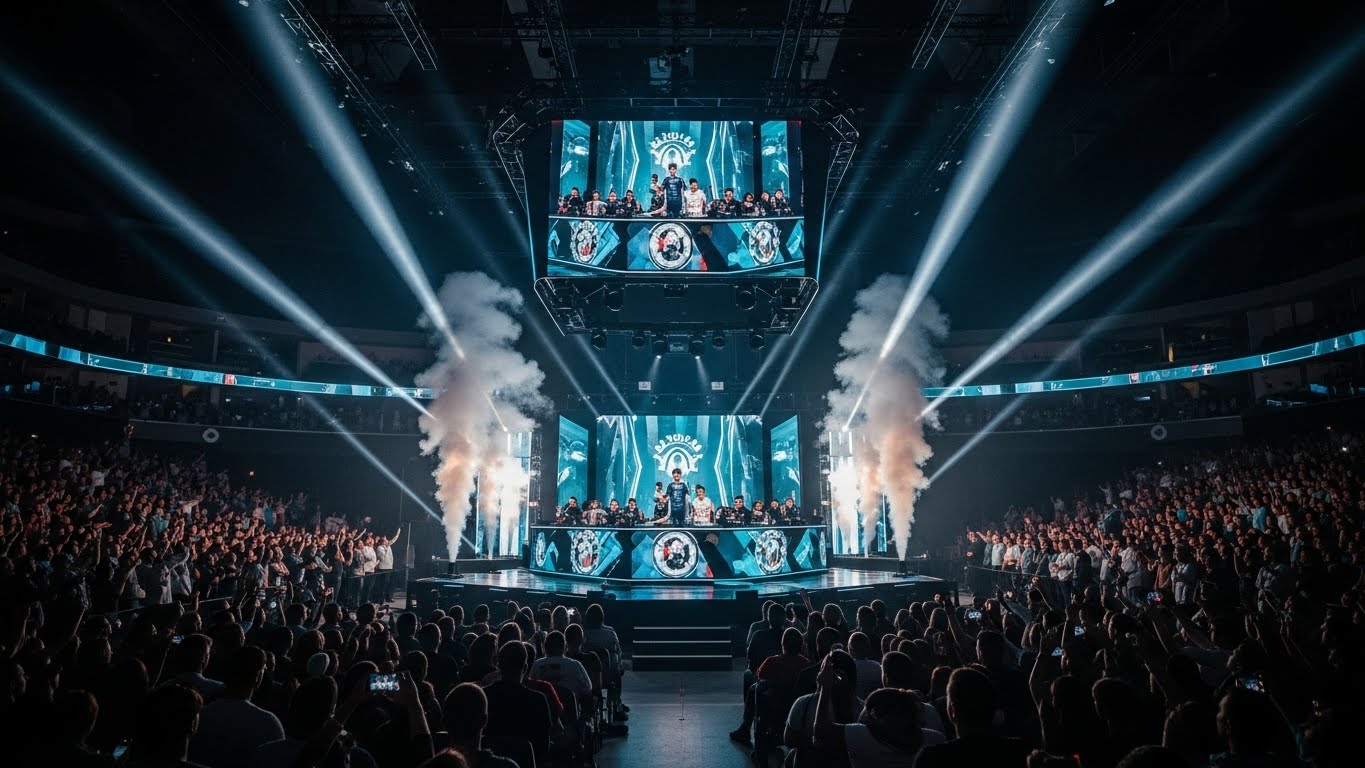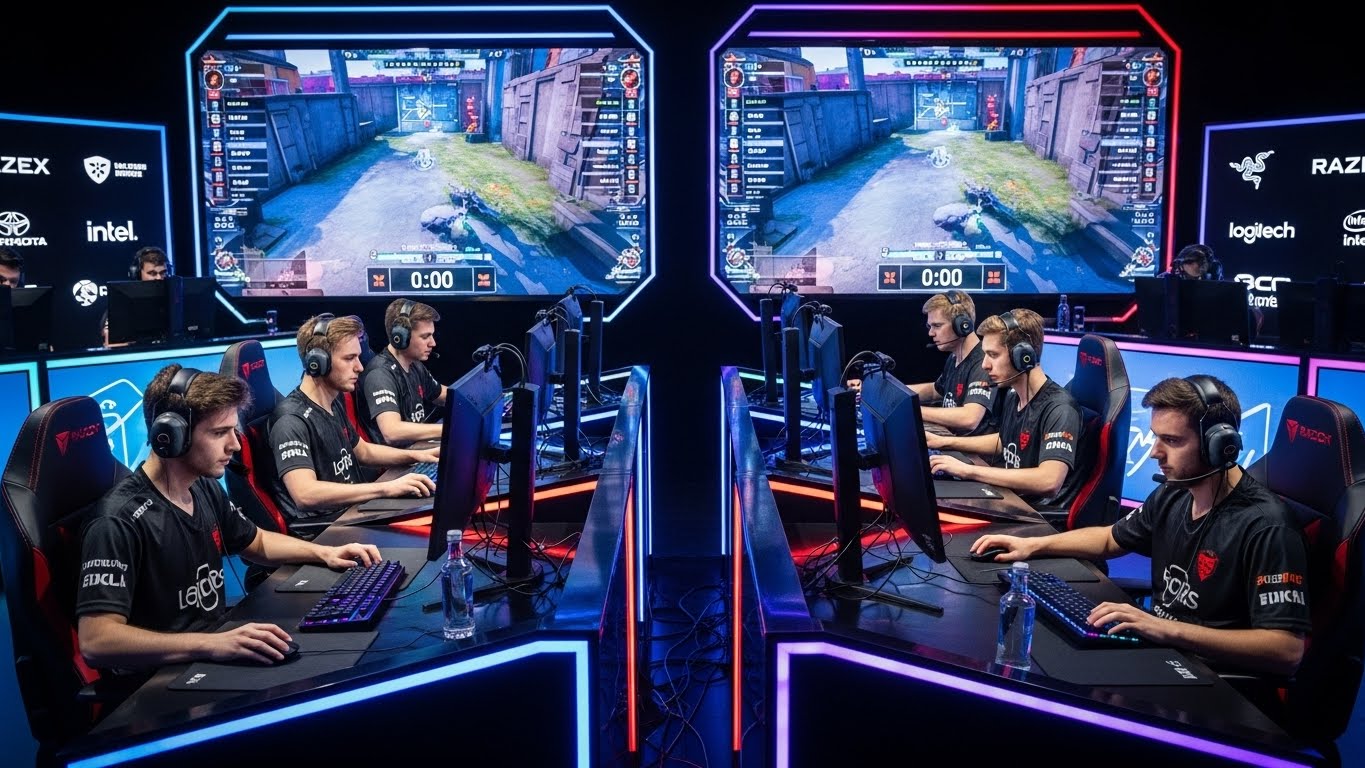
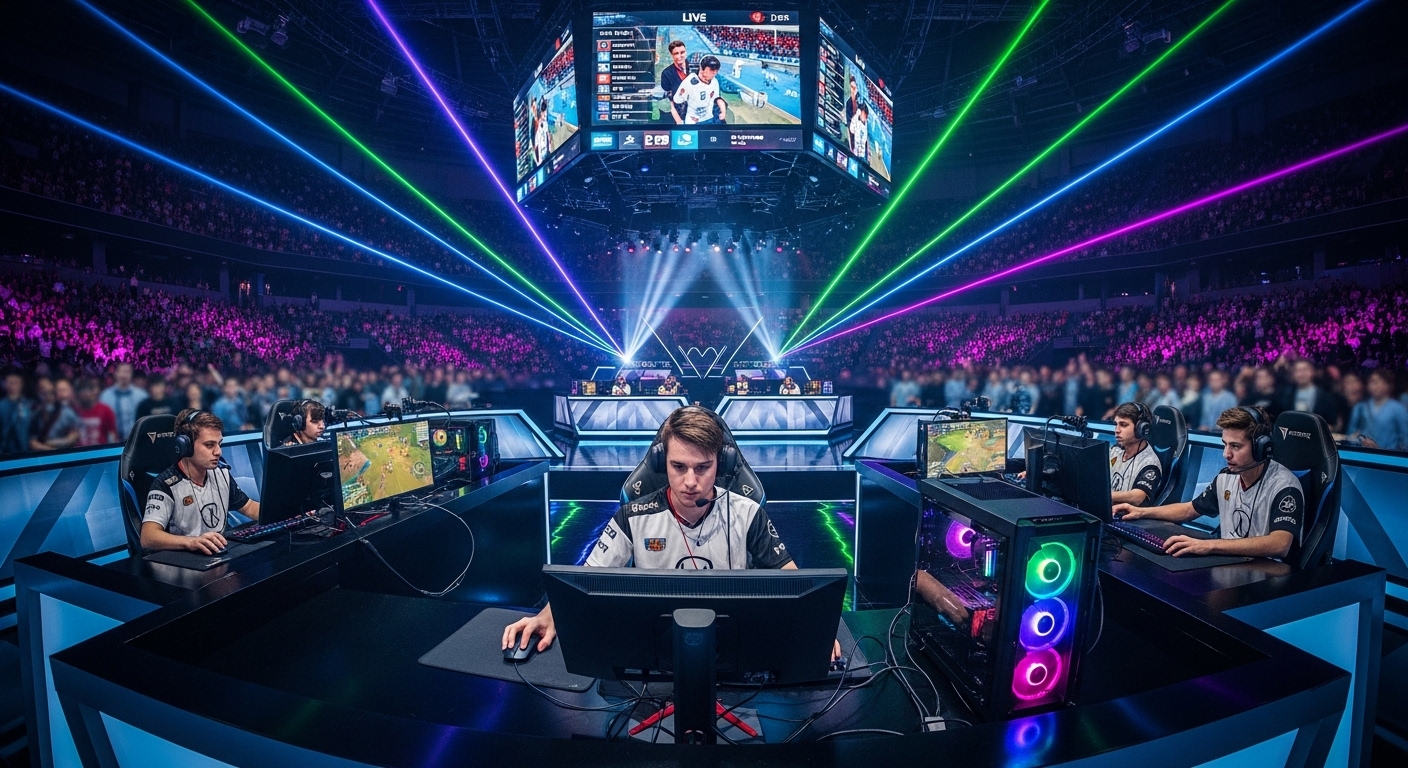
In recent years, esports has gone from being a niche hobby for a select group of gamers to a global entertainment powerhouse. What was once a small-scale, grassroots scene has exploded into a billion-dollar industry, drawing millions of viewers, professional players, and corporate sponsors. Esports is not just about playing video games anymore; it’s about skill, strategy, and the pursuit of excellence in digital arenas. In this blog post, we will explore the rise of esports, its impact on the gaming industry, the players behind the scenes, and what the future holds for competitive gaming.
What is Esports?
Esports, short for “electronic sports,” is a form of competitive video gaming where individuals or teams compete against each other in various video game titles. These competitions can take place locally, regionally, or internationally, often in front of a live audience and streamed online to millions of viewers. Esports has evolved into a professional sport, with dedicated players, coaches, analysts, broadcasters, and entire teams competing for prestige, fame, and significant financial rewards.
Unlike casual gaming, where the objective is entertainment, esports is all about high-level competition, strategic thinking, and technical proficiency. Players often spend years mastering their chosen games, honing their skills, and understanding the nuances of their respective titles. Games like League of Legends, Dota 2, Counter-Strike: Global Offensive, Overwatch, and Fortnite have become staples of the esports scene, but new titles are constantly emerging to add variety to the competitive landscape.
The Rise of Esports: From Hobby to Global Industry
Esports began in the 1990s, but its real growth began in the early 2000s with the rise of online gaming and the development of competitive multiplayer games. Titles like StarCraft, Warcraft III, and Quake were some of the first to establish competitive leagues and tournaments. These games attracted passionate communities, and tournaments like the World Cyber Games and Electronic Sports World Cup helped legitimize esports as a competitive endeavor.
However, the real turning point for esports came with the advent of live streaming platforms, particularly Twitch, which launched in 2011. Twitch provided a platform for gamers to stream their gameplay to a global audience, and it didn’t take long before esports tournaments started broadcasting live on the platform. This move made esports more accessible and brought it into the mainstream.
In parallel, the prize pools for esports tournaments began to increase exponentially. One of the most notable examples is Dota 2, which has consistently offered some of the largest prize pools in esports history. The International, an annual Dota 2 tournament, broke records in 2018 when its prize pool exceeded $25 million, funded in part by crowdfunding efforts from the community. This growth in prize money and the increasing number of tournaments attracted big sponsors, such as Coca-Cola, Intel, and Red Bull, further legitimizing esports as a viable business venture.
The Impact of Esports on the Gaming Industry
Esports has had a profound impact on the gaming industry in several key ways. First and foremost, it has shifted the way developers design games. Many modern games are now being built with competitive play in mind. Titles like League of Legends and Counter-Strike: Global Offensive are continually updated with balance changes, bug fixes, and new content to keep the competitive scene fresh and exciting.
Moreover, esports has given rise to a new breed of game designers, analysts, and event organizers who specialize in creating and managing competitive gaming experiences. Esports tournaments have become major events in the gaming world, with organizers like ESL (Electronic Sports League) and DreamHack hosting global tournaments that draw thousands of spectators and offer significant prizes for top players and teams.
Additionally, esports has significantly influenced game monetization strategies. Many esports titles, particularly free-to-play games like Fortnite and Apex Legends, generate revenue through in-game purchases, skins, and cosmetics. These microtransactions allow the games to remain free for players while also supporting ongoing development and competitive events. The rise of live streaming and esports broadcasting has also created opportunities for content creators, influencers, and streamers to earn a living through sponsorships, donations, and subscriptions.
The Players: From Gamers to Superstars
Behind every successful esports tournament and team are the players—highly skilled individuals who dedicate their lives to mastering their games. These players are not just gamers; they are athletes in their own right, with many training for hours each day, analyzing gameplay footage, and working with coaches and analysts to improve their strategies.
Esports players are often compared to traditional athletes in terms of discipline, commitment, and mental fortitude. Just like professional football players or basketball stars, esports competitors need to maintain peak physical and mental health to stay competitive. Training regimes now often include not only gameplay practice but also physical exercise, cognitive training, and stress management techniques. Mental endurance is crucial, as esports players must stay focused for long periods of time, often under intense pressure during high-stakes matches.
Some of the most famous esports players have become global superstars. Names like Faker (Lee Sang-hyeok) in League of Legends, s1mple (Oleksandr Kostyliev) in Counter-Strike, and Ninja (Tyler Blevins) in Fortnite have transcended the esports world to become household names. These players have achieved fame through their incredible skills, but also through social media, streaming platforms, and endorsement deals with major brands.
Esports has also seen the rise of esports organizations, which are akin to sports teams in traditional sports. These organizations recruit top-tier players, manage their contracts, and help them navigate the complex world of sponsorships, tournaments, and media appearances. Top organizations like Team Liquid, Cloud9, and Fnatic have been at the forefront of this movement, and they have helped bring esports players the kind of recognition and financial rewards that were once reserved for professional athletes in traditional sports.
The Spectator Experience: Watching Esports
One of the driving forces behind the growth of esports has been its ability to draw in massive audiences. Unlike traditional sports, where viewers attend games in person, esports fans primarily watch competitions online, either through streaming platforms like Twitch, YouTube, or through specialized esports websites. This shift to online streaming has made esports accessible to a global audience, regardless of geographic location.
Major esports tournaments are often broadcast live and feature expert commentators, analysis, and interviews with players and coaches. The format of these broadcasts is similar to traditional sports, with a focus on providing insight into the gameplay, player strategies, and the high-stakes drama of competitive gaming. Some of these broadcasts even feature elaborate graphics, replays, and slow-motion footage to help viewers understand the complexity of the game and the level of skill required to succeed.
Esports has also pioneered new forms of fan interaction. Viewers can engage with players, ask questions, or interact with other fans through live chat or social media. Additionally, some tournaments offer in-game items or cosmetics as rewards for watching, creating an even more immersive fan experience.
The Future of Esports
The future of esports looks incredibly bright, with continued growth expected across all aspects of the industry. As the global audience for esports continues to expand, more traditional sports organizations and networks are beginning to invest in esports. For example, major sports networks like ESPN and Fox Sports have started broadcasting esports events, and professional sports teams like the Golden State Warriors and Dallas Cowboys have launched their own esports divisions.
Esports is also making its way into mainstream culture. From partnerships with Hollywood studios to esports being included in events like the Asian Games, the competitive gaming scene is being taken seriously by traditional industries. There are even discussions about including esports as an official event in the Olympic Games, which would be a major milestone for the industry.
On the technological front, advances in virtual reality (VR) and augmented reality (AR) could revolutionize the way esports are played and experienced. Imagine a future where players compete in fully immersive virtual arenas or where fans can experience the thrill of competition in real time through AR technology. The possibilities are endless.
Conclusion
Esports is no longer just a subculture; it has evolved into a major global industry that continues to shape the future of gaming and entertainment. With its ever-growing player base, increasing investment, and burgeoning mainstream recognition, esports has firmly established itself as a dominant force in the world of competitive entertainment. The skill, dedication, and passion of the players, as well as the innovation of developers and organizers, ensure that esports will continue to thrive and evolve in the years to come. For gamers, fans, and investors alike, the future of esports is an exciting and ever-changing journey.